



K-cups are convenient. That's the whole point. Pop one in, press a button, thirty seconds later you have coffee. But if you have acid reflux or a sensitive stomach, that convenience comes with a catch; most K-cups are made from conventional coffee that sits at a 5.0–5.1 pH, and drinking one on an empty stomach in the morning is a reliable way to start your day with heartburn.
The good news is that low acid K-cups exist. The less good news is that not all of them actually deliver on the label. Here's what separates the ones that work from the ones that are just marketing.
Why Most K-Cups Are Hard on Your Stomach
The problem isn't the K-cup format itself. It's what's inside. Standard coffee pods use conventional coffee at conventional pH levels. The single-serve format actually concentrates the issue slightly because the brew cycle is fast and uses hot water under pressure, which extracts acids efficiently.
For people without stomach sensitivities, this is a non-issue. For anyone with acid reflux, GERD, or a sensitive digestive system, that morning pod can be the first domino, triggering symptoms that follow them through the rest of the day.
Switching to a low acid K-cup addresses the problem at the source rather than working around it with timing tricks or antacids.
What Makes a K-Cup "Low Acid"
Same criteria as low acid coffee generally, but worth understanding so you can evaluate claims intelligently:
The bean and process matter more than the format. A K-cup filled with conventionally processed coffee at 5.0 pH is not low acid, regardless of what the packaging says. True low acid K-cups start with beans that have less acid, either through origin selection, roasting, or a specific processing method.
Look for published pH data. Brands that have actually tested their coffee will tell you the number. Brands that haven't will use vague language like "smooth," "gentle," or "easy to digest" without anything to back it up. A pH of 5.5 or higher (closer to neutral) is what you're looking for.
The water-and-steam process. trücup specifically uses a natural water-and-steam method to remove harmful acids from the bean before it ever gets roasted, ground and packed into a pod. No chemicals, no additives. The result is coffee that measures at 5.74 pH, compared to 5.02–5.08 for Dunkin' and Starbucks pods.
Does Keurig Make a Low Acid Coffee?
Keurig itself doesn't make coffee. They make the machines. The pods are made by various brands licensed to use the K-cup format. So the question is really: which brands make low acid K-cups that work in a Keurig?
The short answer is that the options are limited. Most major brands like Green Mountain, Starbucks, Dunkin', Folgers produce standard-acidity pods. A handful of specialty low acid brands offer K-cup versions of their coffee, trücup included.
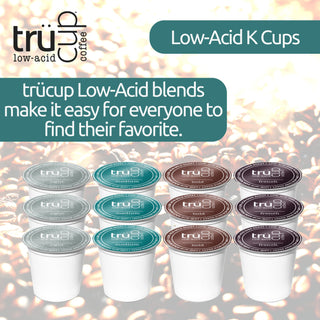
trücup's single-serve cups are compatible with Keurig machines and come in multiple roasts, so you're not stuck with one flavor profile just because you need lower acid. The same water-and-steam process that brings their bagged coffee to 5.74 pH applies to the pods.
Can You Get Low Acid K-Cups at Walmart or Costco?
This comes up constantly in search data. People want to know if they can pick up low acid pods in a grocery store rather than ordering online.
The honest answer: options are very thin in retail. Walmart carries a limited selection of low acid coffee, but the pod format specifically is hard to find on shelves. Costco occasionally carries specialty coffee K-cups in bulk, but low acid varieties aren't a consistent part of their lineup.
Amazon is the most reliable source for low acid K-cups. trücup's single-serve pods are available there as well as directly through trucup.com. Buying direct often means access to subscription pricing and sample options that aren't available through third-party retailers.
Low Acid K-Cups for Specific Needs
For acid reflux and GERD: The primary goal is pH reduction. trücup's pods at 5.74 pH are among the most stomach-friendly options in the K-cup format. Pair with the habit of not drinking on an empty stomach for best results.
For sensitive stomachs generally: Same recommendation; pH is the lever that matters most. If you're also sensitive to caffeine, trücup's half-caff single-serve cuts caffeine by 50% while keeping the acid reduction.
For seniors: Digestive sensitivity tends to increase with age, and the convenience of K-cups makes them a popular format for older coffee drinkers. Low acid pods cover both concerns. They are easier on the stomach and easy to use.
For people who want variety: trücup's single-serve lineup spans multiple roasts, so you're not locked into one option. Light, medium, bold, and assortment packs are available.
Tips for Getting the Most Out of Low Acid K-Cups
Even with a lower-acid pod, a few habits make a meaningful difference:
Don't brew on the smallest cup setting. Smaller brew volumes = more concentrated coffee = more acid per sip. Use the 8–10oz setting for a balanced cup.
Don't drink on an empty stomach. A small amount of food first buffers the acid and reduces the chance of reflux, regardless of which coffee you're drinking.
Add oat milk or dairy milk. Both raise the overall pH of your cup slightly, adding a small buffer that can help if you're especially sensitive. It's a minor adjustment but a real one.
Rinse your Keurig regularly. Mineral buildup in the machine can affect brew temperature and extraction. A clean machine brews more consistently.
Store pods away from heat and moisture. K-cups have a long shelf life but degrade faster if stored near the stove or in a humid cabinet. A cool, dry spot keeps them fresh.
Frequently Asked Questions
What coffee pods are good for acid reflux? Pods made from coffee that has been specifically processed to reduce acidity, not just marketed as "smooth." trücup's single-serve cups are independently tested at 5.74 pH, making them one of the most reliably stomach-friendly pod options available.
Does Keurig have a low acid coffee option? Keurig doesn't make coffee. They make machines. But several brands produce low acid K-cups compatible with Keurig machines. trücup is one of the few with published pH data to back up the claim.
Which K-cups are less acidic? Among major brands, dark roast pods tend to have slightly less acid than light roasts, and dark roasts contain more N-methylpyridinium, a compound research suggests may suppress excess stomach acid secretion. But the difference between roasts is modest. For meaningful acid reduction, you need a brand that has specifically engineered the process to lower pH, like trücup.
What is the healthiest K-cup coffee? Depends on what "healthy" means to you. For stomach health and acid reduction, low acid pods at a verified pH are the priority. For broader health concerns (mold, pesticides, organic certification), brands like Purity Coffee focus on those variables, though they're primarily available in bagged format, not K-cups.
Does low acid coffee really make a difference? For most people with acid reflux or GERD, yes, noticeably. The acids in coffee are a primary trigger for reflux symptoms, and reducing them meaningfully reduces the likelihood of symptoms. It's not a cure for GERD, but it removes one of the most consistent daily triggers.
Where can I buy low acid coffee pods? Online is your best bet. trücup's single-serve cups are available at trucup.com, Amazon, and Walmart.com. Retail availability for low acid pods specifically is limited, though this is changing as the category grows.
If you've been managing acid reflux by timing your coffee, taking antacids, or just suffering through it, a low acid K-cup is worth trying before you accept that as your permanent routine. The format stays the same…Keurig, thirty seconds, done. The only thing that changes is what's inside the pod.
Still working out whether coffee is the problem? Start with why coffee causes heartburn, or compare the low acid brands on the market before you switch.
Try a trücup sample pack before committing to a full order.